From Mez 1935
157. P. Oerstediana Mez in DC. Monogr. Phaner. IX. (1896) 448.
Folia homomorpha, persistentia, tenuissime membranacea, e basi angusta in laminam lanceolatam, ad 0,2 m longam et 32 mm latam, integerrimam, glabram dilatata. Scapus tenuis, subglaber, erectus, foliis normalibus conspersus. Inflorescentia perpauciflora, laxe secundeque subracemosa, ad 70 mm longa; axi subglabro; bracteis lanceolatis, peracutis, ad 60 mm longis sepala permulto superantibus. Flores pedicellis crassiusculis ad 10 mm longis stipitati, erecti; sepalis ad 20 mm longis. Capsula ad 3/4 longit. supera.
Costarica: bei Ujara (Oersted n.44).
158. P. Funkiana A. Dietr. in Otto et Dietr., Allgem. Gartenzeitg. XIX. (1851) 337;
Regel in Gartenfl. IV. (1855) 45, t. 113.
Puya Funkiana Linden, Cat. n. 5 (1850) 2 et ex Dietr., l.c.
Phlomostachya Funkiana Beer, Bromel. (1857) 47.
Pitcairnia Funkii Wawra, It. Sax.-Cob. (1883) 174, nomen.
P. macrocalyx Hook. in Bot. Mag. LXXIX. (l853) t. 4705.
Folia interiora super vaginam in petiolum permanifestum, canaliculatum, vix ultra 0,1 m longum contracta, tunc in laminam lanceolatam, semimetralem, usque ad 50 mm latam dilatata, integerrima, adulta glabra. Scapus crassiusculus, erectus, vaginis ovato-ellipticis, longe acuminatis, dorso furfuraceis, internodia longe superantibus praeditus. Inflorescentia pauci-vel subpauciflora, laxiuscule racemosa inter bracteas axin ostendens, usque ad 0,2 m longa et 80 mm diam. metiens; bracteis per anthesin patentibus, late ovatis, acutis, ad 30 mm longis, sepala superantibus, haud imbricatis. Flores pedicellis quamvis brevibus crassiusculisque tamen manifestis stipitati, patentes vel subreflexi, ad 65 mm longi, glabri; sepalis virenti-flavis, 35 mm longis, sublanceolatis, subrotundatis, asymmetricis, haud carinatis. Petala lactea, valde inaequilonga, anteriora bina ad 62 mm metientia, subrotundata, ligulata, stamina subaequantia. Antherae ad 11 mm longae. Ovarium ad 4/5r longit. superum.
Colombia: Merida (Funk), Sierra Nevada de Sta. Martha (Purdie). Brit. Guyana: ohne Standortsangabe (Schomburgk).
159. P. maidifolia (Morr.) Decsne. ap. Planch. in Fl. des Serres IX. (1853-54) 151, t. 915.
Puya maidifolia Morr. in Ann. de Gand V. (1849) 453, t. 289.
Puya maydifolia Decsne. in Rev. Hortic. 3. ser. V. (1851) 347.
Lamproconus maidifolius Lem. ex Bak. Bromel. (1889) 109.
Neumannia maidifolia C. Koch in Ind. sem. Hort. Berol. 1856, App. 2.
Pitcairnia maizaifolia Hort. ex Beer, Bromel. (1857) 46.
P. zeifolia C. Koch in Ind. sem. hort. Berol. 1857, App.4; Bak. in Bot. Mag. CVII. (1881) t. 6535.
Phlomostachys densiflora Beer, Bromel. (1857) 46, e. p.
Vriesea tricolor Hort. Ex Bak. Bromel. (1889) 109.
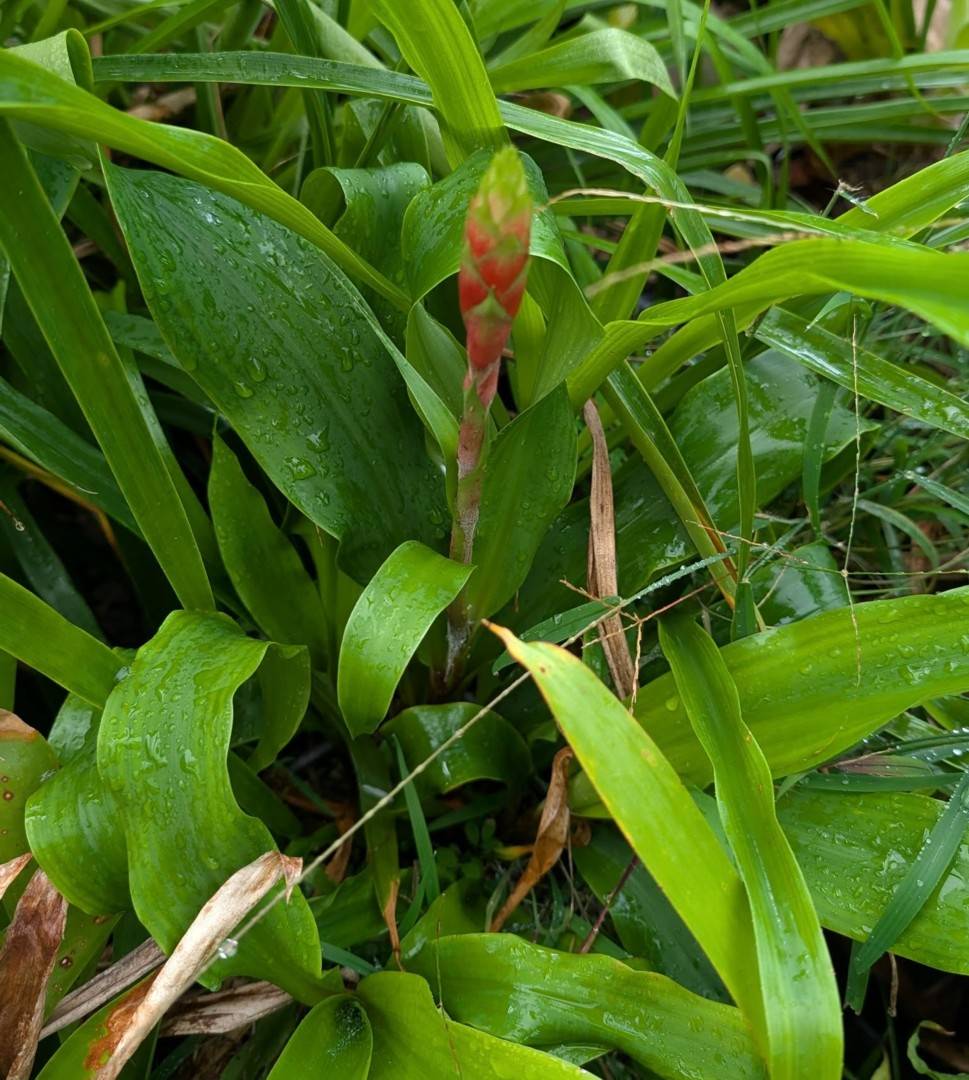
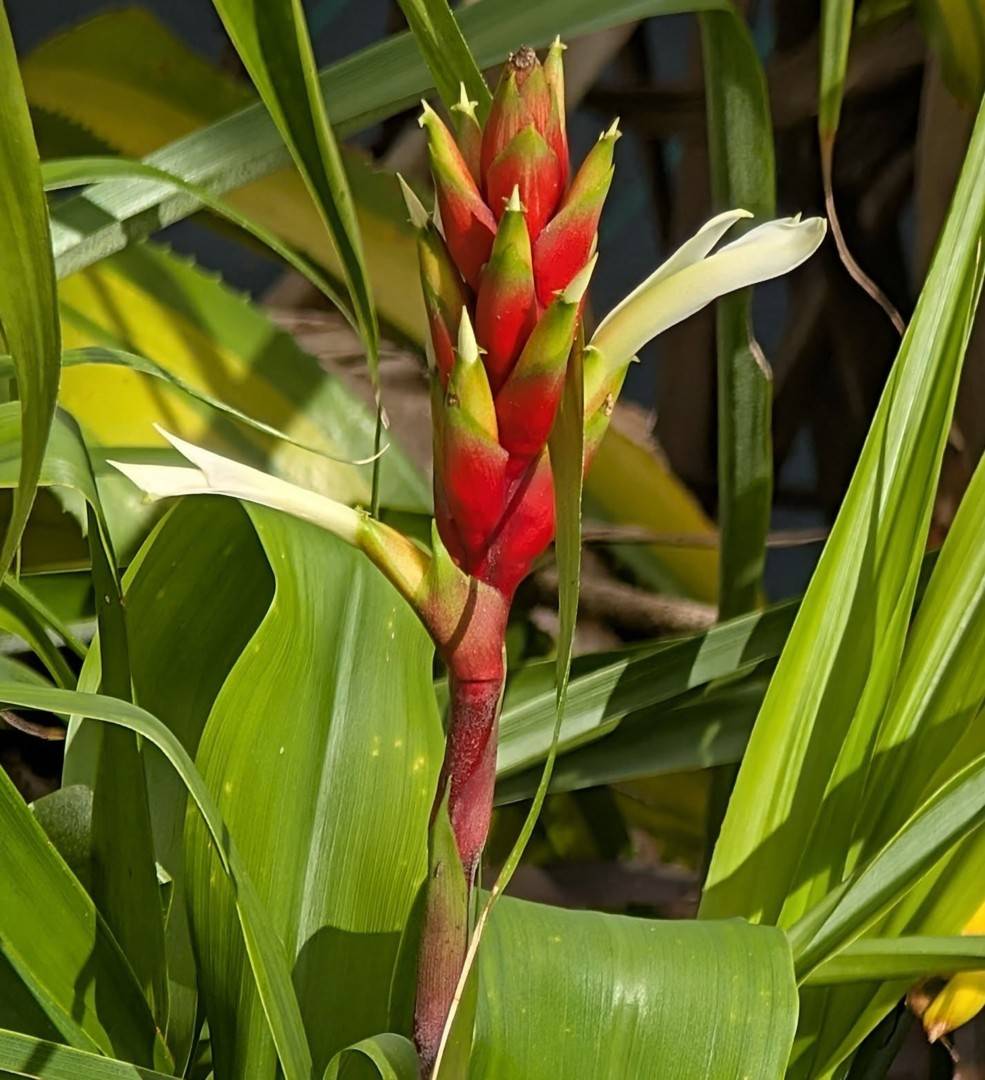
Folia interiora super vaginam in petiolum permanifestum, canaliculatum, ad 0.2 m longum contracta, tunc in laminam lanceolatam, semimetralem, ad 60 mm latam producta, integerrima, adulta glabra. Scapus validus, erectus, vaginis quam internodia longioribus, ex ovato-ovali acuminatis, dorso plus minus lepidotis, integerrimis praeditus. Inflorcscentia submulti-vel multiflora, dense subracemosa, per anthesin cylindrica, ad 0.3 m longa et floribus computatis usque ad 0.1 mm diam. metiens; axi per anthesin saltem bracteis omnino obtecto celatoque; bracteis late ovatis, subacutis, 30-35 mm longis, primum stricte erectis, nunc prope apicem virentibus nunc totis purpureis, sepala aequantibus. Flores per anthesin stricte erecti deflorati patentes, breviter pedicellati, ad 55 mm longi, glabri; sepalis viridibus, 26 mm longis, late ellipticis, apice rotundatis et plus minus recurvis, conspicue asymmetricis. Petala satis inaequilonga usque ad 52 mm metientia, virenti-vel lacteo-alba, per anthesin decurva, acutiuscula, stamina superantia, eligulata. Antherae ad 11 mm longae. Ovarium fere superum. Venezuela: bei Caracas (Funk). Colombia: Sierra Nevada de Sta. Martha (Purdie, H. H. Smith n. 2552), ohne Standortsangabe (Goudot). Costarica: bei Virilla (Tonduz im herb. inst. phys.-geogr. Costaric. n. 16348), ohne Standortsangabe (Pittier und Durand n. 11187). - In Kultur.
PITCAIRNIA ZEIFOLIA by J G Baker in Curtis Bot 1881 TAB. 6535
Native of Central America.
Nat. Ord. BBOMELIACEAE, Tribe PITCAIRNIAE.
Genus PITCAIRNIA, L'Herit.; (K.Koch in Walp. Ann. vol. vi. p. 78.)
PITCAIRNIA (Lamproconus) zeifolia ; foliis basalibus 5-6 rosulatis longe petiolatis inermibus lanceolatis chartaceis 2-3-pedalibus utrinque viridibus e medio ad apicem et basin angustatis, pedunculo elongato foliis pluribus reductis vaginantibus acuminatis praedito, floribus pluribus ascendentibus 1axe subspicatis, pedicellis crassis brevissimis, bracteis ovatis rubris calyce subequilongis, calycis oblongi segmentis oblongis obtusis valde imbricatis viridibus glabris, petalis albidis lingulatis obtusis calyce subtriplo longioribus basi haud appendiculatis, genitalibus petalis subaequilongis, seminibus utrinque conspicue caudatis.
P. zeifolia, K. Koch in Ind. Sem. Hort. Berol. 1854, App. p. 11 ; Walp. Ann. Vol. vi. p. 80
This is one of the small number of Pitcairnias from Central America, with broad petioled leaves, large subsessile flowers, large clasping bracts, and seeds conspicuously tailed at both ends, which make up the section Lamproconus published as a genus by Lemaire. Its nearest ally is the New Granadan P. Funckiana of A. Dietrich, which was figured under the name of P. macrocalyx, at tab. 4705 of the BOTANICAL MAGAZINE. The present plant, although it has been known for a quarter of a century, has not been figured previously. It was discovered by Warcewicz in Guatemala, and we have a fine specimen in the Kew Herbarium, gathered by Purdie in the province of Santa Martha in New Granada, about 1845. Our drawing was made from a plant sent by Dr. Regel, which flowered in the Palm House at Kew in December, 1879.
DESCR. Leaves five or six to a basal rosette; petiole reaching the length of a foot, channelled, quite unarmed; lamina lanceolate, two or three feet long, two or two and a half inches broad at the middle, papery in texture, green on both sides, almost entirely destitute of lepidote scales, narrowed gradually to both ends. Peduncle one or two feet long, sheathed by numerous reduced lanceolate leaves with long free tips. Flowers a dozen or more in a multi-farious rather lax subspicate raceme; pedicels very short and stout; bracts bright red, ovate, about as long as the calyx, which they clasp and conceal. Calyx oblong, an inch long, green, naked; segments oblong, obtuse, much imbricated. Petals greenish-white, lingulate, obtuse, about three times as long as the calyx, not scaled at the base. Stamens inserted at the base of the petals; anther linear, yellow. Ovary adnate to the calyx only at the very base; style filiform, reaching to the tip of the petals; stigmas spirally twisted. Capsule as long as the calyx. Seeds very numerous, minute, with a tail an eighth of an inch long at each end.
J. G. .Baker.
Fig. 1, apex of a stamen, magnified ; 2, the pistil, complete, natural size; 3, horizontal section of the ovary.
PITCAIRNIA MACROCALYX. in Curtis Mag 79 1853 TAB. 4705.
Large-calyxed Pitcairnia.
Nat. Ord. BROMELIACEAE.-HEXANDRIA MONOGYNIA.
Gen. Char. (Vide supra, TAB. 4241.)
PITCAIRNIA macrocalyx; foliis radicalibus longissimis lanceolatis acuminatis¬simis inferno longe attenuatis vaginantibus glaberrimis submembranaceis costatis inermibus caulinis sensim minoribus, caule elongato subfurfuraceo¬lanato tereti, racemo laxiusculo, floribus (albis) patentibus demum reflexis, bracteis ovatis concavis acuminatis calycem longitudine aequantibus, pedi¬cellis brevissimis, calyas (flavi) ampli sepalis ovatis acuminatis appresso-conniventibus, petalis oblongo-lineari-spathulatis subtortis basi esquamosis, ovario supero.
The present is one of the many South American novelties we are accustomed to receive from the Belgian Gardens, without name or particular locality (The same plant, indeed, we have received from Mr. Linden under the name of "Puya maidifolia" from Mexico; but the character of that, as given in Walpers' 'Annales', is much at variance with ours.)
In no work can we find the present species described: but its nearest ally is unquestionably Pitcairnia suaveolens of Lindley in the"Botanical Register", tab. 1069. That has the same large, white, somewhat twisted petals, and the same-coloured calyx; but is very different in the exceedingly lax raceme, the comparatively small and narrow segments to the calyx, inferior ovary, glabrous stem, and very narrow leaves. The present has the largest calyx of any species known to us, and it is altogether a fine-looking plant. With us it flowered in a warm stove in December, 1852.
DESCR. Root-leaves very numerous, crowded, two to three feet long, elongato-lanceolate, tapering gradually to an exceedingly fine point, and below attenuated into a long convolute base; the texture submembranaceous, colour bright green, the margin quite entire, the surface glabrous and free from every kind of vlllaus covering. Stem shorter than the leaves, terete, at the base as thick as one's finger, between furfuraceous and woolly, leafy, the leaves remote, gradually smaller upwards till they pass into the bracteas of the inflorescence. Raceme a span long, of many large, spreading, at length reflexed flowers, rather lax, or moderately compact, braeteated. Bracteas membranaceous, ovate, much and finely acuminated, very concave, as long as the calyx and pedicel. Pedicels very short. Calyx large, almost an inch long, formed of three connivent yellow ovate-lanceolate sepals. Petals large, white, thrice as long as the calyx, slightly twisted and imbricated, linear-oblong, spathulate, the apex often reflexed, the sides more or less involute, the base within destitute of scale. Stamens six, as long as or a little longer than the petals. Anthers linear-oblong, yellow. Ovary almost entirely, if not quite superior, oblong-ovate with three furrows, tapering into the filiform white style, which equals the stamens in length. Stigmas three, green, spirally twisted.
Fig. 1. Petal. 2. Pistil :-magnified.