ETYMOLOGY
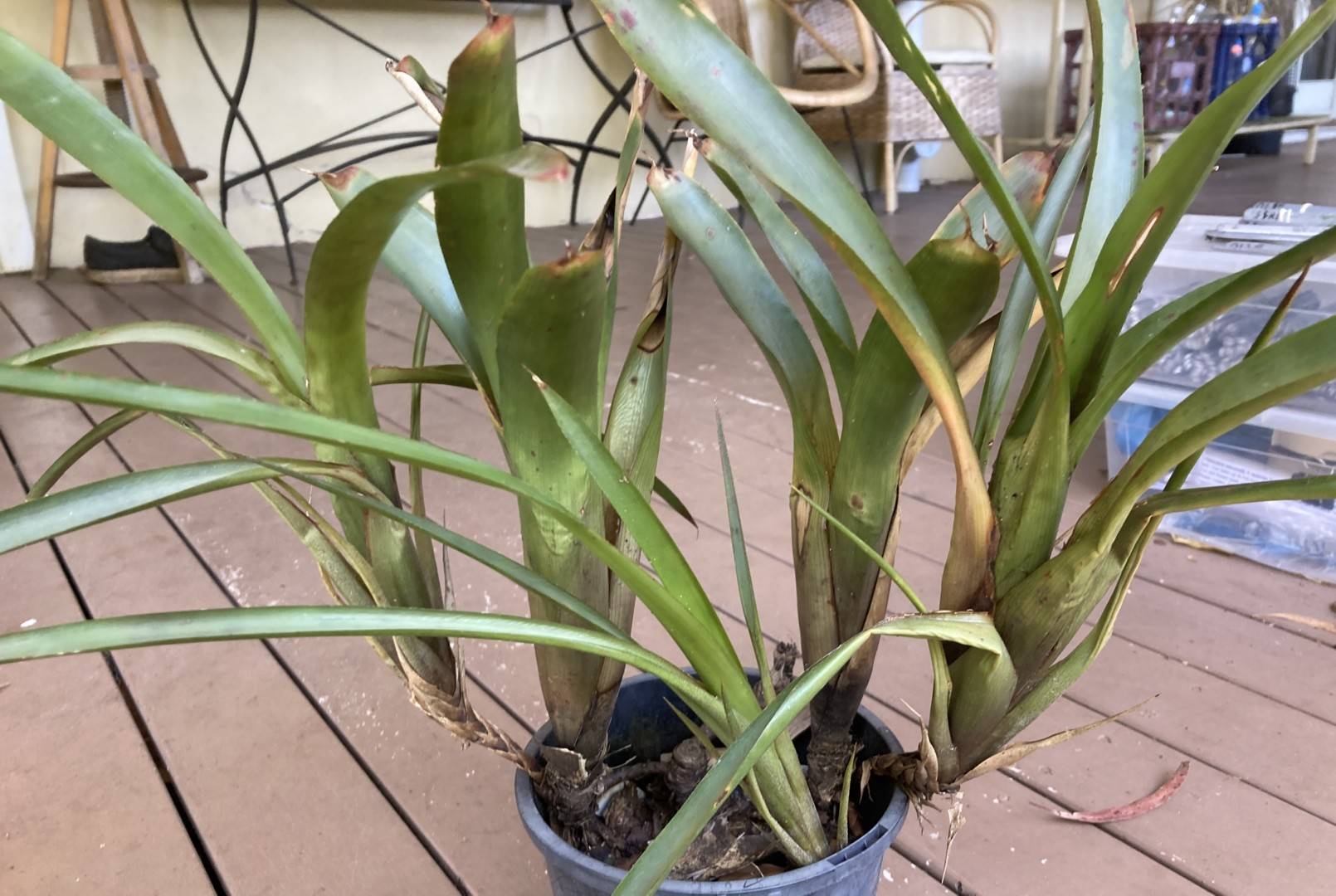
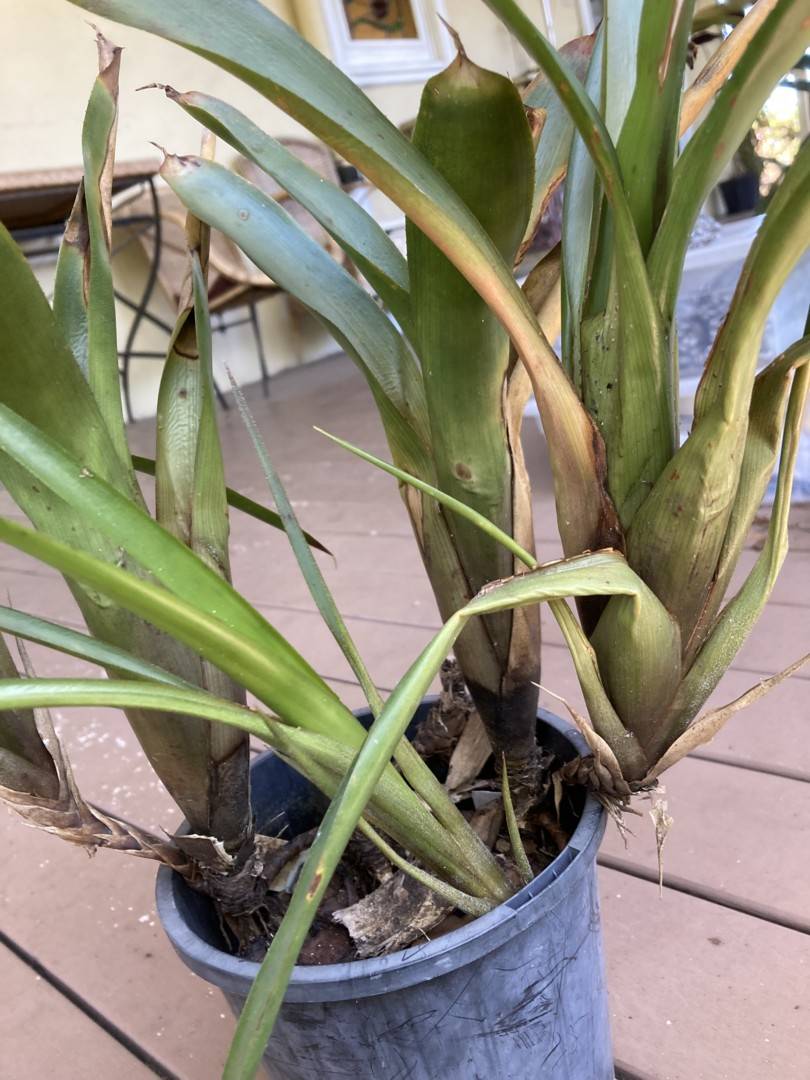
Neoregelia diversifolia has dimorphic leaves - the outer ones are shaped differently from the inner ones, which serves to visually characterize this taxon. The name emphasizes this characteristic through the Latin terms diversus (= "diverse", "in opposite directions") and folium (= "leaf").
MATERIAL EXAMINED
Espirito Santo: Domingos Martins, R. Kautsky s. n. legit, fl. cult. Oct. 1997 (HB, probable clonotype); Pedra Azul, R. A. C. Ramaldes & F. Ramaldes, fl, cult. Oct. 1997, E. Leme 4082 (HB):
DISCUSSION
Neoregelia diversifolia is small in stature and well adapted to the rupicolous habit. When exposed to direct sunlight, the leaves may turn a lovely red hue in contrast to the more commonly observed green color. Neoregelia paulistana is apparently the most closely related species in terms of morphology. However, N. diversifolia differs in its smaller size, stolons bearing imbricate, obtuse to acute, paleaceous cataphylls, that are thin in texture and soon disintegrate, leaves not nervate and petals more shortly connate at base.
N. diversifolia shows an interesting similarity in habit to N. angustibracteolata; the latter is somewhat more delicate and flower details are completely dissonant and typical of the subgenus Neoregelia.
DISTRIBUTION & HABITAT
According to the protologue of N. diversifolia, this species was supposedly collected in Pedra Azul municipality, Minas Gerais. It was actually found in the Pedra Azul region of Espirito Santo, according to its collector (Kautsky, pers. comm.).
As far as we know today, N. diversifolia is restricted to the type locality in Pedra Azul. Here, it is a rupicolous species, growing on rocky outcrops on the edge of the Atlantic forest at ca. 1,200m altitude, in a transition zone with grassy vegetation (highaltitude grasslands). It is protected in the Pedra Azul State Park, and flowers from October to November. There are two distinct clones in cultivation.
Detail from S&D
24. Neoregelia diversifolia E. Pereira, Bradea 2: 29, pl. 3. 1975. Fig 501 A-C.
This new species is related to N. hoehneana, L B. Smith, from which it differs especially in the shape, size and color of the petals and in many other details.
From S&D
Plant propagating by 5mm thick stolons covered with castaneous scales.
Leaves forming a tubular rosette 25cm high;
sheaths of the outer ovate, 6cm long, 4cm wide, of the inner narrowly ovate, 10cm long, 5cm wide, green and castaneous-lepidote outside;
blades of the outer gradually narrowed at apex into a subpungent spine, 12cm long, 15-20mm wide, of the inner linear, subrounded, mucronate, 10cm long, 25-30mm wide, minutely white-lepidote, serrate with castaneous, 1mm long spines 3mm apart.
Scape 3cm long, 8mm thick, white;
basal scape-bracts ovate, acuminate, 15mm long, 10mm wide, entire, white-lepidote;
upper scape-bracts ("primary bracts") oblong, acuminate, 4cm long, 15mm wide, exceeding the ovary, entire, white, lepidote at apex.
Floral bracts unknown;
pedicels 1cm long, white.
Sepals lanceolate, acuminate, 35mm long, connate for 10mm, glabrous, red;
petals 7cm long, high-connate, the limb linear, acute, 55mm long, 5mm wide, spreading at anthesis, the apical half violet;
stamens 3cm long; ovary subtrigonous, 10mm long, 5mm thick; placentae subapical; ovules many, obtuse.
Type. Kautsky 457 (holotype, HB), Pedra Azul, Minas Gerais, Brazil, 5 Nov 1974.
Distribution. Known from the type collection only.